-
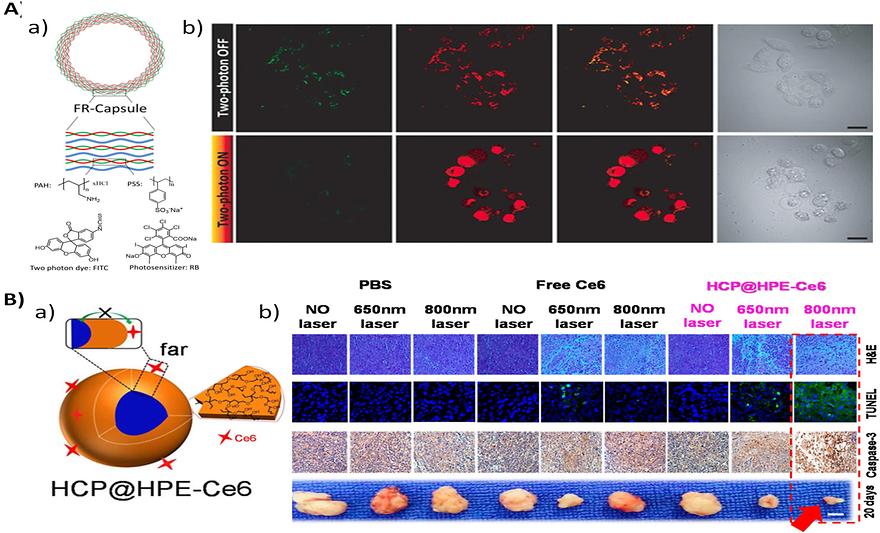
Two-photon excitation photosensitizers for photodynamic therapy: From small-molecules to nano-complex systemsby Vinayak Juvekar, Dong Joon Lee, Tae Gwan Park, Rohit Samanta, Pallavi Kasar, Chaeyoon Kim, Fabian Rotermund, Hwan Myung KimCoordination Chemistry Reviews 2024, 506, 215711; https://doi.org/10.1016/j.ccr.2024.215711AbstractTwo-photon excitation photodynamic therapy (TP-PDT), which uses near-infrared light (>700 nm) as an excitation source, is an essential approach for modern deep-tissue phototherapy. TP offers the advantage of enhanced spatial precision, which enables targeted treatment without harming the surrounding healthy tissue. This review focuses on the recent developments in TP-activating photosensitizers (TP-PSs), which are key agents in TP-PDT. We begin with a brief description of the concept of TP-PDT and then we summarize the recent developments in various types of TP-PSs. We introduce various types of small-molecule-based photosensitizers, specific organelle targeting, and activation strategies using biomolecules, transition metal complexes, and nanocomplex systems. For clarity, we have provided a limited number of TP-PSs characterized by systematic and well-structured approaches. This reveals the promising future of TP-PDT as an innovative therapeutic approach.Keywords: Two-photon excitation; Photodynamic therapy; Photosensitizer; Deep-tissue therapy
-
96
- 작성자박은영
- 작성일2025-02-28
- 27
- 동영상동영상
-
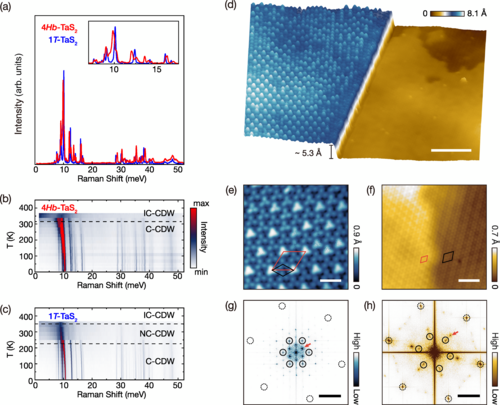
Charge-ordered phases in the hole-doped triangular Mott insulator 4Hb-TaS2by Bang, Junho; Lee, Byeongin; Yang, Hyungryul; Kim, Sunghun;, Wulferding, Dirk; Cho, DooheePhysical Review B 2024, 109(19), 195170; https://doi.org/10.1103/PhysRevB.109.195170Abstract4Hb-TaS2 has been proposed to possess unconventional superconductivity with broken time-reversal symmetry due to distinctive layered structure, featuring a heterojunction between a 2D triangular Mott insulator and a charge-density wave metal. However, since a frustrated spin state in the correlated insulating layer is susceptible to charge ordering with carrier doping, it is required to investigate the charge distribution driven by interlayer charge transfer to understand its superconductivity. Here, we use scanning-tunneling microscopy and spectroscopy (STM/S) to investigate the charge-ordered phases of 1𝑇−TaS2 layers within 4Hb-TaS2, explicitly focusing on the non-half-filled regime. Our STS results show an energy gap which exhibits an out-of-phase relation with the charge density. We ascribe the competition between onsite and nonlocal Coulomb repulsion as the driving force for the charge-ordered insulating phase of a doped triangular Mott insulator. In addition, we discuss the role of the insulating layer in the enhanced superconductivity of 4Hb-TaS2.Keywords: Thin film transistors; Doping; Metals; Films; Substrates; Iron; FabricationSubjects: Charge density waves; Superconductors; Transition metal dichalcogenides; Raman spectroscopy; Scanning tunneling microscopy; Scanning tunneling spectroscopy
-
94
- 작성자박은영
- 작성일2025-02-28
- 33
- 동영상동영상
-
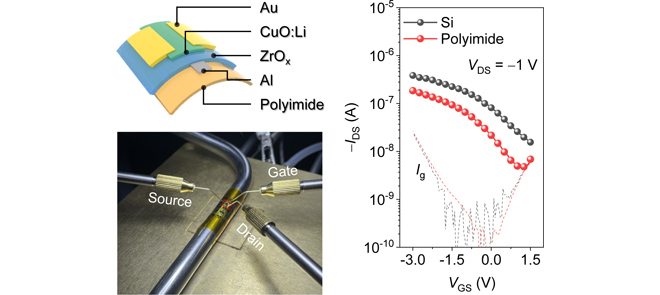
Alkali Metal Doping on Sol-gel-derived Copper Oxide for Performance Enhancement of Thin-film Transistorsby Seokhyeon Baek, Jun-Gyu Choi, Sungjun ParkIEEE Journal of Flexible Electronics 2024, 3(6), 228-233; https://doi.org/10.1109/JFLEX.2024.3407687AbstractIn recent years, copper oxide (CuxO) has emerged as a promising p-type oxide semiconductor owing to its high Hall mobility. However, its inherent drawbacks, such as the substantial native defects and uncontrolled stoichiometry, limit its application in thin-film transistors (TFTs) for energy-efficient complementary devices. In this study, we employ the sol-gel synthetic approach for facile doping to investigate the doping effects of alkali metals (Li, Na, and K) on the electrical performance of CuxO TFTs. The results demonstrate that doping, particularly with lithium (Li), significantly improves the electrical performance of CuxO TFTs. The similarity in ionic radius facilitates efficient hole transport, which considerably enhances the field-effect mobility ( 4.7×10⁻³ cm2/Vs), subthreshold swing (SS) (8.3 V/dec), and on-off current ratio (~104) with minimized hysteresis. The structural analysis of the Li-doped CuxO films using X-ray diffraction (XRD) does not exhibit any significant lattice distortion and an increase in the grain size implies the reduction of trap sites. Consequently, the successful fabrication of Li-doped CuxO TFTs on polyimide substrates, using ZrOx as a gate dielectric layer, demonstrates its compatibility with flexible electronics. This approach enhances the electrical performance of p-type CuxO TFTs and presents a scalable and efficient pathway for the development of advanced TFT technology in flexible electronics.Keywords: Thin film transistors; Doping; Metals; Films; Substrates; Iron; Fabrication
-
92
- 작성자박은영
- 작성일2025-02-28
- 25
- 동영상동영상
-
The characterization of (𝑛 − 1)-spheres with 𝑛 + 4 vertices having maximal Buchstaber numberby Choi, Suyoung; Jang, Hyeontae; Vallée, MathieuJournal für die reine und angewandte Mathematik (Crelles Journal) 2024, 811, 267-292; https://doi.org/10.1515/crelle-2024-0027AbstractWe present a computationally efficient algorithm that is suitable for graphic processing unit implementation. This algorithm enables the identification of all weak pseudo-manifolds that meet specific facet conditions, drawn from a given input set. We employ this approach to enumerate toric colorable seeds. Consequently, we achieve a comprehensive characterization of (𝑛−1) -dimensional PL spheres with 𝑛+4 vertices that possess a maximal Buchstaber number. A primary focus of this research is the fundamental categorization of non-singular complete toric varieties of Picard number 4. This classification serves as a valuable tool for addressing questions related to toric manifolds of Picard number 4. Notably, we have determined which of these manifolds satisfy equality within an inequality regarding the number of minimal components in their rational curve space. This addresses a question posed by Chen, Fu, and Hwang in 2014 for this specific case.
-
90
- 작성자박은영
- 작성일2025-02-28
- 25
- 동영상동영상
-
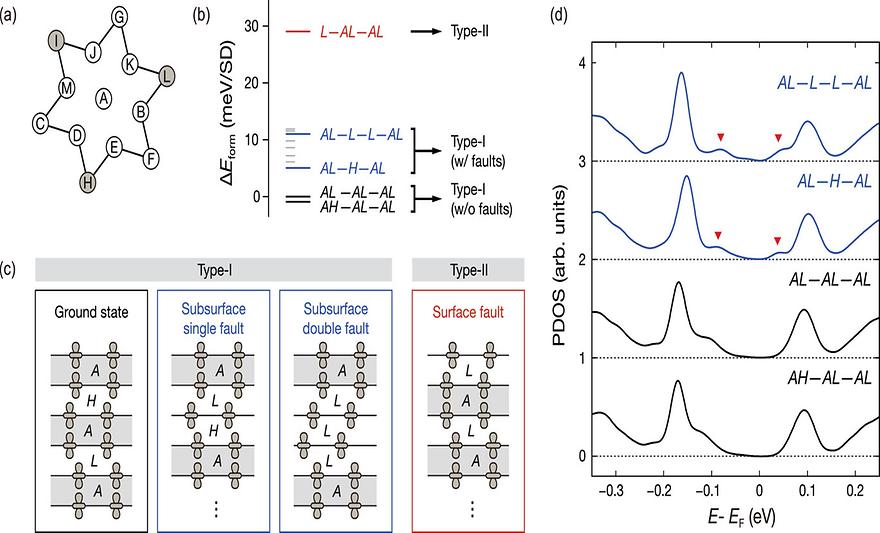
Origin of distinct insulating domains in the layered charge density wave material 1T-TaS2by Yang, Hyungryul; Lee, Byeongin Lee; Bang, Junho; Kim, Sunghun; Wulferding, Dirk; Lee, Sung-Hoon; Cho, DooheeAdvanced Science 2024, 11(28), 2401348; https://doi.org/10.1002/advs.202401348AbstractVertical charge order shapes the electronic properties in layered charge density wave (CDW) materials. Various stacking orders inevitably create nanoscale domains with distinct electronic structures inaccessible to bulk probes. Here, the stacking characteristics of bulk 1T-TaS2 are analyzed using scanning tunneling spectroscopy (STS) and density functional theory (DFT) calculations. It is observed that Mott-insulating domains undergo a transition to band-insulating domains restoring vertical dimerization of the CDWs. Furthermore, STS measurements covering a wide terrace reveal two distinct band insulating domains differentiated by band edge broadening. These DFT calculations reveal that the Mott insulating layers preferably reside on the subsurface, forming broader band edges in the neighboring band insulating layers. Ultimately, buried Mott insulating layers believed to harbor the quantum spin liquid phase are identified. These results resolve persistent issues regarding vertical charge order in 1T-TaS2, providing a new perspective for investigating emergent quantum phenomena in layered CDW materials.Keywords: band insulator; charge density waves; Mott insulator; scanning tunneling microscopy; stacking order
-
88
- 작성자박은영
- 작성일2025-02-28
- 36
- 동영상동영상
-
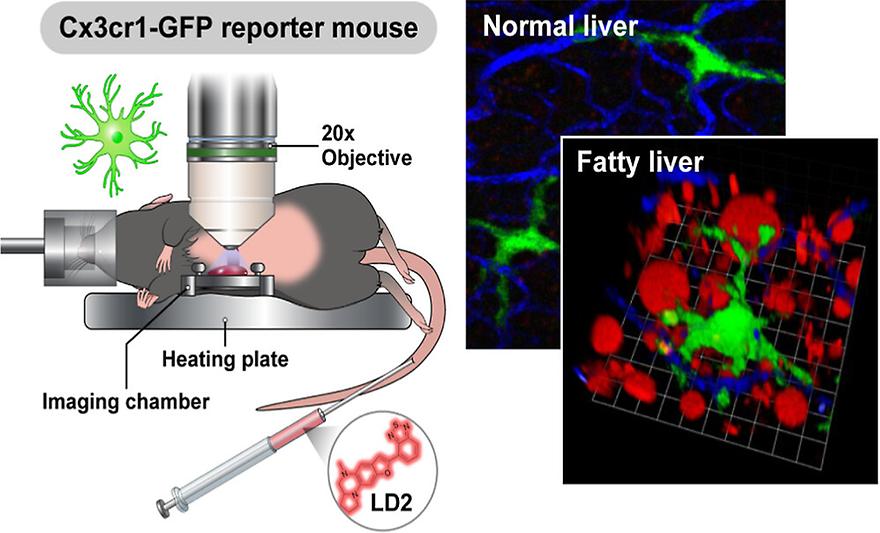
Multicolor Two-Photon Microscopy Imaging of Lipid Droplets and Liver Capsule Macrophages In Vivoby Eun Seo Kim, Jeong-Mi Lee, Jong-Young Kwak, Hyo Won Lee, In-Jeong Lee, Hwan Myung KimAnalytical Chemistry 2024, 96(21), 8467–8473; https://doi.org/10.1021/acs.analchem.4c00228AbstractLipid droplets (LDs) store energy and supply fatty acids and cholesterol. LDs are a hallmark of chronic nonalcoholic fatty liver disease (NAFLD). Recently, studies have focused on the role of hepatic macrophages in NAFLD. Green fluorescent protein (GFP) is used for labeling the characteristic targets in bioimaging analysis. Cx3cr1-GFP mice are widely used in studying the liver macrophages such as the NAFLD model. Here, we have developed a tool for two-photon microscopic observation to study the interactions between LDs labeled with LD2 and liver capsule macrophages labeled with GFP in vivo. LD2, a small-molecule two-photon excitation fluorescent probe for LDs, exhibits deep-red (700 nm) fluorescence upon excitation at 880 nm, high cell staining ability and photostability, and low cytotoxicity. This probe can clearly observe LDs through two-photon microscopy (TPM) and enables the simultaneous imaging of GFP+ liver capsule macrophages (LCMs) in vivo in the liver capsule of Cx3cr1-GFP mice. In the NAFLD mouse model, Cx3cr1+ LCMs and LDs increased with the progress of fatty liver disease, and spatiotemporal changes in LCMs were observed through intravital 3D TPM images. LD2 will aid in studying the interactions and immunological roles of hepatic macrophages and LDs to better understand NAFLD.Keywords: High-k dielectrics; Quaternary oxide films; Solution processing; Device reliability; Thin-film transistors
-
86
- 작성자박은영
- 작성일2025-02-28
- 28
- 동영상동영상
-
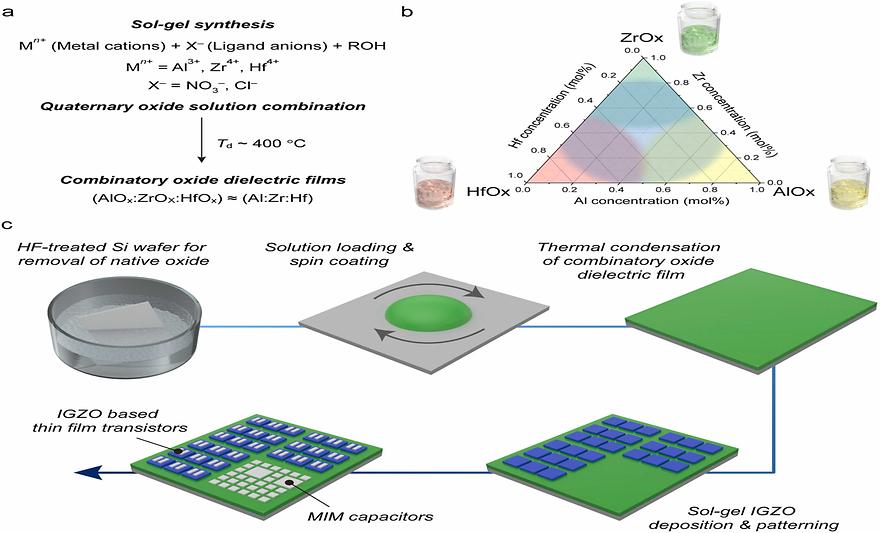
Bias-stress-stable Sub-1.5 V Oxide Thin-film Transistors via Synergistic Composition of Sol-gel Quaternary High-k Oxide Dielectricsby Seokhyeon Baek; Jun-Gyu Choi; Won-June Lee; Taehyun Kwak; Yong-Ryun Jo; Sungjun ParkJournal of Alloys and Compounds 2024, 994, 174636; https://doi.org/10.1016/j.jallcom.2024.174636AbstractA rising demand in reliable, energy-efficient, and large-area electronics, particularly in the realm of sol-gel oxide thin-film transistors (TFTs), has steered research focus away from semiconductor towards dielectrics. However, achieving both bias stability and low-voltage operation remains a significant hurdle. While typical oxide TFTs employ high-dielectric-constant (high-k) dielectrics with lowered film thickness to acquire low-voltage operation, they inevitably suffer from undesired defects at both bulk and interfacial trap sites in dielectric layer. In this study, bias-stress-stable all solution-processed oxide TFTs were demonstrated with operation voltage under 1.5 V via sol-gel quaternary high-k oxide dielectric (Al-Hf-Zr-O, AHZO). In-depth understanding of their individual contributions to dielectric performance leads to the acquisition of optimized composition ratios of AHZO with amorphous feature and outstanding dielectric performance, marked by dielectric constant (k) over 11, leakage current density (Jleak) below 10−5.5 A cm−2, and sturdy breakdown strength (EB) exceeding 5 MV cm−1. By integrating the AHZO with In-Ga-Zn-O (IGZO) layer, we achieved sub 1.5 V TFTs while maintaining excellent bias stability with threshold voltage (VTH) shift lower than 0.20 V for 3600 s. Our findings offer a detailed insight into the realm of multi-component oxide dielectrics, paving the way for miniaturization and reliability in functional devices and sensors.Keywords: High-k dielectrics; Quaternary oxide films; Solution processing; Device reliability; Thin-film transistors
-
84
- 작성자박은영
- 작성일2025-02-28
- 83
- 동영상동영상
-
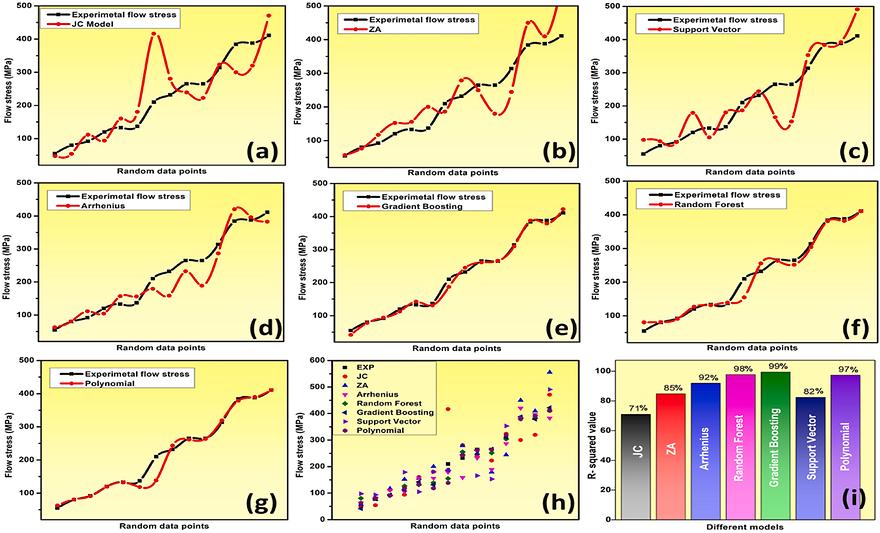
Enhancing flow stress predictions in CoCrFeNiV high entropy alloy with conventional and machine learning techniquesby Dewangan, Sheetal Kumar;Jain, Reliance;Bhattacharjee, Soumyabrata;Jain, Sandeep;Paswan, Manikant;Samal, Sumanta;Ahn, ByungminJournal of Materials Research and Technology 2024, 30, 2377-2387; https://doi.org/10.1016/j.jmrt.2024.03.164AbstractA machine learning technique leveraging artificial intelligence (AI) has emerged as a promising tool for expediting the exploration and design of novel high entropy alloys (HEAs) while predicting their mechanical properties at both room and elevated temperatures. In this paper, we predict the flow stress of hot-compressed CoCrFeNiV HEAs using conventional (qualitative and quantitative models) and advanced machine learning approaches across various temperature and strain rate conditions. Conventional modeling methods, including the modified Johnson-Cook (JC), modified Zerilli–Armstrong (ZA), and Arrhenius-type constitutive equations, are employed. Simultaneously, machine learning models are utilized to forecast flow stress under different hot working conditions. The performance of both conventional and machine learning models is evaluated using metrics such as coefficient of determination (R2), mean abosolute error (MAE), and root mean squared error (RMSE). The analysis reveals that the gradient boosting machine learning model shows superior prediction accuracy (with value R2 = 0.994, MAE = 7.77%, and RMSE = 9.7%) compared to conventional models and other machine learning approaches.Keywords: High entropy alloy; Machine learning; Flow stress; Thermodynamics; Simulation
-
82
- 작성자박은영
- 작성일2025-02-28
- 33
- 동영상동영상
-
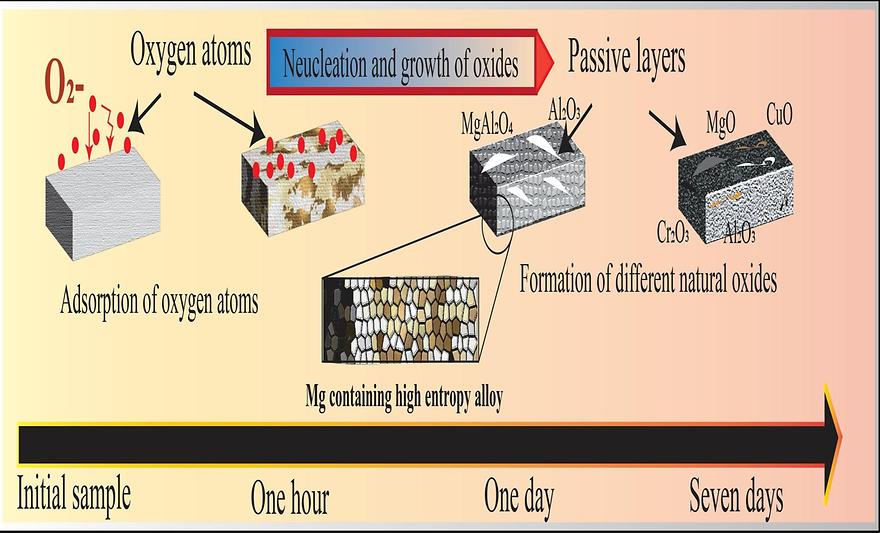
XPS study on passivation behavior of naturally formed oxide on AlFeCuCrMg1.5 high-entropy alloyby Dewangan, Sheetal Kumar;Kumar,Saurav;Maulik, Ornov;Pillai, Gokul M.; Kumar, Vinod; Ahn, ByungminChemical Physics Letters 2024, 841, 1401171; https://doi.org/10.1016/j.cplett.2024.141171AbstractHigh-entropy alloys have exceptional oxidation resistance due to their passive oxide film. In this study, photoelectron spectroscopy was used in a modern atomic-scale in situ initial oxidation analysis process to determine the oxidation behavior and elemental variation on its breakdown. Furthermore, the behavior of natural oxide formed on the AlFeCuCrMg1.5 HEA after the exposure of the alloy to the atmosphere for one hour, one day, and seven days was investigated in detail. Through a survey scan, the elements present on the oxidized surface were determined and quantified. Additionally, the seven-day-exposed HEA was depth-profiled and discovered drastic modifications in the alloy.Keywords: High entropy alloy; Mechanical alloying; Spark plasma sintering; Oxidation; XPS
-
80
- 작성자박은영
- 작성일2025-02-28
- 28
- 동영상동영상
-
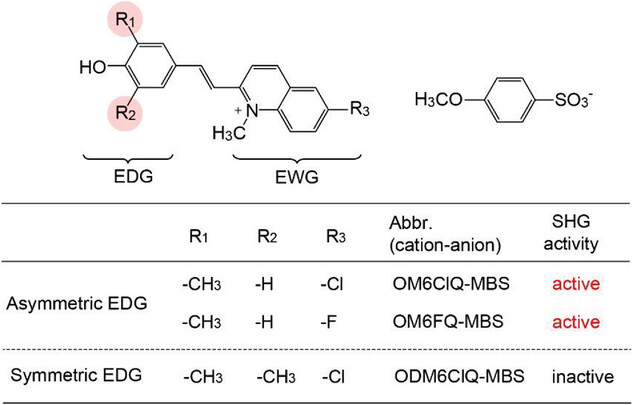
Two-photon excitation photosensitizers for photodynamic therapy: From small-molecules to nano-complex systemsby Ga‐Eun Yoon, Dong‐Joo Kim, Yu‐Jin Park, Chaeyoon Kim, Seung‐Jun Kim, Bong‐Rim Shin, Yun‐Sang Lee, Chae‐Won Lee, Jung‐Wook Park, In Cheol Yu, Woojin Yoon, Hoseop Yun, Dongwook Kim, Mojca Jazbinsek, Fabian Rotermund, O‐Pil KwonAdvanced Optical Materials 2024, 12(21), 2400413; https://doi.org/10.1002/adom.202400413AbstractThe symmetry reduction of molecular shape of cationic chromophores as a design strategy to develop organic terahertz (THz) generators is used. Electron donating group (EDG) with an asymmetric shape is introduced into two types of cationic styryl-quinolinium chromophores, leading to the development of several novel non-centrosymmetric crystals with high macroscopic optical nonlinearity. In contrast, when an EDG with a symmetric shape is introduced, centrosymmetric crystal structure is obtained in all investigated crystals. For THz wave generation, crystals based on asymmetrically shaped EDG exhibit several optimal crystal characteristics, including a plate-shape morphology, a large size, and an in-plane polar axis. Furthermore, over the entire range of molecular phonon vibrations, 0.5–4 THz, the steric hindrance group in the asymmetrically shaped EDG has a strong influence on the suppression of THz phonon vibrations, leading to a low THz absorption coefficient. The crystals based on asymmetrically shaped EDG generate an ≈40 times stronger THz electric field than the inorganic ZnTe crystal and very broad THz spectra, extending up to 16 THz. Thus, the symmetry reduction of the molecular shape of cationic chromophores through the introduction of an asymmetrically shaped EDG is an effective design approach for the development of novel organic THz crystals.
-
78
- 작성자박은영
- 작성일2025-02-28
- 40
- 동영상동영상

 [논문] 최수영 - The characterization of (𝑛 − 1)-spheres with 𝑛 + 4 vertices having maximal Buchstaber number 위치 확인