-
-
86
- 작성자박은영
- 작성일2025-02-28
- 26
- 동영상동영상
-
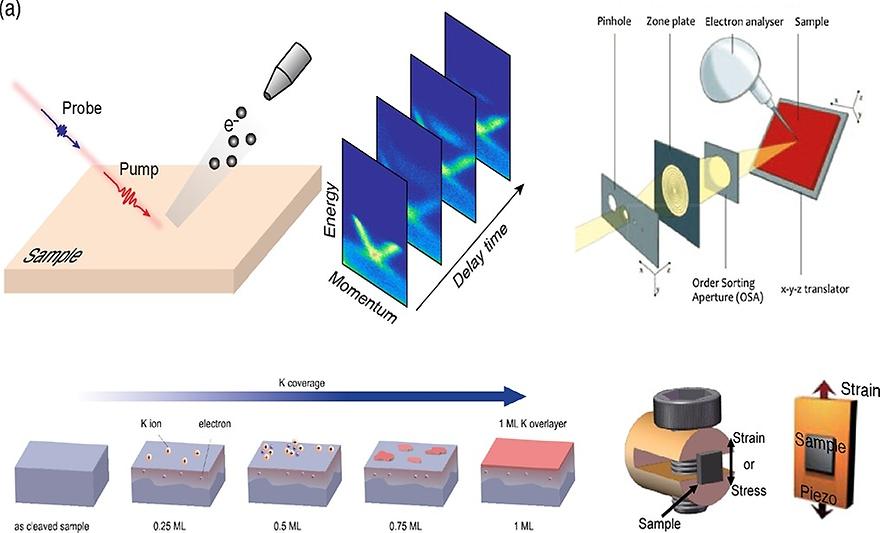
Recent technical advancements in ARPES: Unveiling quantum materialsby Lim, Chan-young; Kim, Sunghun; Jung, Sung Won; Hwang, Jinwoong; Kim, YeongkwanCurrent Applied Physics 2024, 60, 43-56; https://doi.org/10.1016/j.cap.2024.01.010AbstractThe technical evolution of angle-resolved photoemission spectroscopy (ARPES) in the late 90s played a pivotal role in the exploration of electronic structures in condensed matter systems. ARPES achieved numerous successes during this period, notably capturing the first evidence of the unconventional d-wave symmetry of the superconducting gap in cuprate superconductors. It also elucidated the essential rules governing topological signatures in the electronic structures of topological materials, and played an essential role in demonstrating the engineered band structures of atomically thin materials. These early achievements spurred significant advancements in the technique. This topical review delves into four cutting-edge ARPES techniques that are currently at the forefront of development: time-resolved ARPES, nano ARPES, in-situ ARPES, and ARPES with novel control parameters. By examining the capabilities of these innovative approaches, we aim to illustrate their potential in unlocking new frontiers and providing unprecedented insights on the electronic structure of quantum materials.Keywords: Angle-resolved photoemission spectroscopy; Time-resolved ARPES; Molecular beam epitaxy; Nano ARPES; Uniaxial strain; In-situ surface doping
-
84
- 작성자박은영
- 작성일2025-02-28
- 28
- 동영상동영상
-
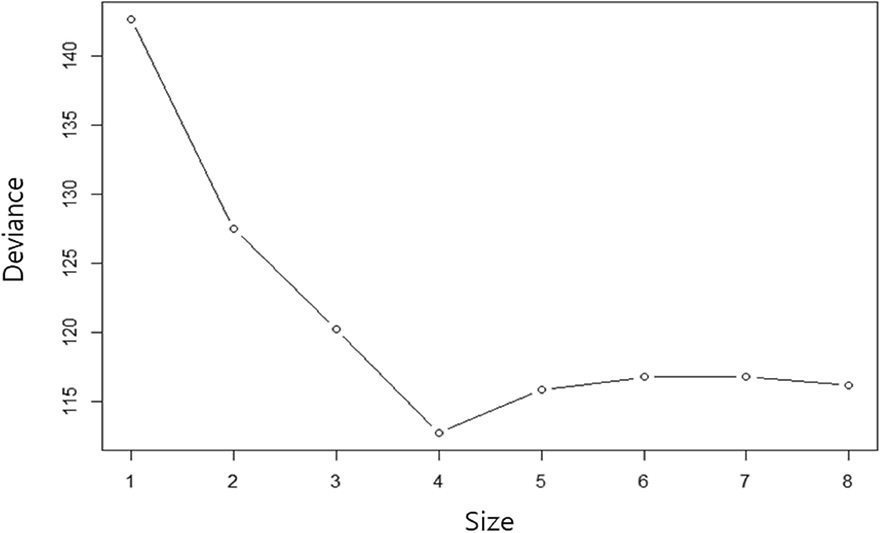
Clinical nurses’ work-life balance prediction due to patient safety incidents using classifcation and regressby Jiwon Kang, Soon-Sun Kwon, Youngjin LeeBMC nursing 2023, 23(1), 70; https://doi.org/10.1186/s12912-024-01719-0AbstractBackgroundPatient safety incidents lead to performance difficulties for nurses when providing nursing practice. This affects work-life balance and causes second and third-victimization. This study predicts factors affecting clinical nurses’ work-life balance due to patient safety incidents using classification and regression tree analysis techniques.MethodsThis study was a secondary analysis of data from a cohort research project, which used a descriptive survey for data collection. Participants comprised 372 nurses. Data were collected using SurveyMonkey, a mobile-based survey software solution, from January to September 2021. Data included the general characteristics of clinical nurses, second damage, second damage support, third damage, and work-life balance. The specific variables included in the analysis chosen through rigorous Lasso analysis form the foundation for predicting work-life balance. Variables with low explanatory power were excluded, thereafter, the variables selected by Lasso were analyzed with a classification and regression tree model to predict work-life balance.ResultsA regression tree was applied to predict work-life balance using seven variables—education level, marital status, position, physical distress, second-victim support, turnover intentions, and absenteeism (selected through Lasso analysis). After pruning, at tree size four, when turnover intentions were < 4.250, physical distress < 2.875, and second-victim support < 2.345, the predicted work-life balance was 3.972. However, when turnover intentions were < 4.250, physical distress < 2.875, and second-victim support ≥ 2.345, then the predicted work-life balance was 2.760.ConclusionsThis study's insights offer crucial groundwork for crafting targeted workforce risk management strategies and fostering a conducive organizational culture to mitigate nursing occupational stress, potentially curbing the recurrence of patient safety incidents and improving nursing practice while enhancing patient outcomes. Future research should explore second and third victim experiences across various healthcare settings globally to understand their impact on WLB and patient safety outcomes.
-
82
- 작성자박은영
- 작성일2025-02-28
- 27
- 동영상동영상
-
Plasmon-Driven Selective Methane Oxidation to Formic Acid at Ambient Conditionsby Thuy Ha Nguyen, Eun Duck Park, Sungju YuACS Energy Letters 2024, 9(2), 538–546; https://doi.org/10.1021/acsenergylett.3c02493AbstractHarnessing the capabilities of plasmonic catalysts, we present a partial oxidation approach for the selective conversion of gaseous methane to liquid formic acid (HCOOH) while suppressing carbon dioxide production. This photoreaction capitalizes on the chemical potential inherent in charge carriers generated via the interband transitions of gold nanoparticles. These energetic electron and hole carriers interact profoundly with adsorbed oxygen molecules (O2), yielding reactive singlet oxygen (1O2) species. Our investigation shows spin-forbidden transitions facilitated by a dexter-type electron exchange process. Remarkably, the resultant 1O2 species effectively reduce the energy barrier associated with C–H bond activation to 24.8 ± 3.9 kJ mol–1. This process initiates the catalytic cascade following the Eley–Rideal model at ambient conditions. Consequently, it drives the preferential production of the oxygenated liquid product, HCOOH, demonstrating an impressive selectivity of >97%. This study offers a new perspective on the O2-mediated oxidation reaction that occurs on plasmonic catalysts.Subjects: what are subjects; Energy; Light; Metal nanoparticles; Molecules; Plasmonics
-
80
- 작성자박은영
- 작성일2025-02-28
- 30
- 동영상동영상
-
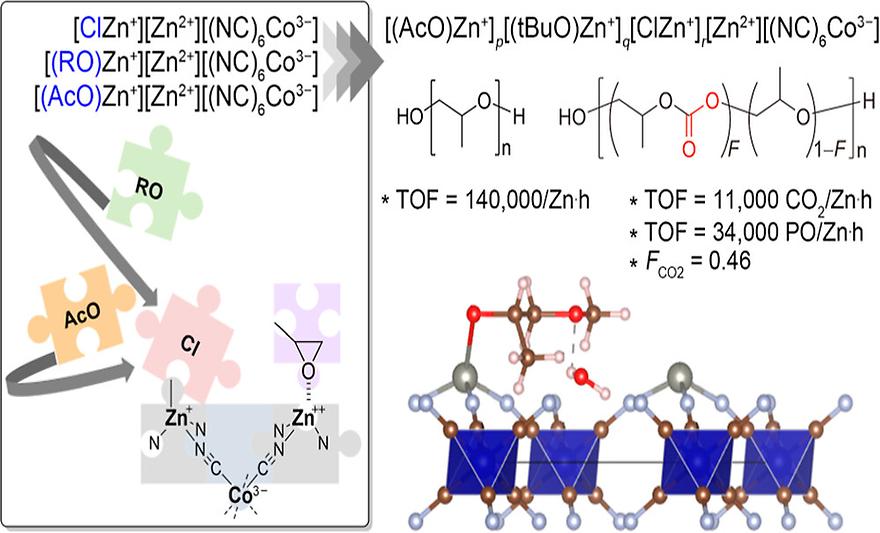
Graphene Oxides as Epsilon-Near-Zero Platforms Operating in Terahertz Frequency Rangeby Yeong Hyun Seo, Mi Ryu Lee, Da-Young Lee, Jun Hyeong Park, Hyeon Jeong Seo, Sang Uk Park, Hyunjin Kim, Seung-Joo Kim, Bun Yeoul LeeInorganic Chemistry 2024, 63(2), 1414–1426; https://doi.org/10.1021/acs.inorgchem.3c03957AbstractReevaluating the composition of the double metal cyanide catalyst (DMC) as a salt of (NC)6Co3– anions with 1:1 Zn2+/(X)Zn+ cations (X = Cl, RO, AcO), we prepared a series of well-defined DMCs, [ClZn+][Zn2+][(NC)6Co3–][ROH], [(RO)Zn+][Zn2+][(NC)6Co3–], [(AcO)Zn+][Zn2+][(NC)6Co3–], [(RO)Zn+]p[ClZn+](1–p)[Zn2+][(NC)6Co3–], [(AcO)Zn+]p[(tBuO)Zn+]q[Zn2+][(NC)6Co3–], and [(AcO)Zn+]p[(tBuO)Zn+]q[ClZn+]r[Zn2+][(NC)6Co3–]. The structure of [(MeOC3H6O)Zn+][Zn2+][(NC)6Co3–] was precisely determined at the atomic level through Rietveld refinement of the synchrotron X-ray powder diffraction data. By evaluating the catalyst’s performance in both propylene oxide (PO) polymerization and PO/CO2 copolymerization, a correlation between structure and performance was established on various aspects including activity, dispersity, unsaturation level, and carbonate fraction in the resulting polyols. Ultimately, our study identified highly efficient catalysts that outperformed the state-of-the-art benchmark DMC not only in PO polymerization [DMC-(OAc/OtBu/Cl)(0.59/0.38/0.15)] but also in PO/CO2 copolymerization [DMC-(OAc/OtBu)(0.95/0.08)].Subjects: Animal feed; Catalysts; Diffraction; Layers; Polyols
-
78
- 작성자박은영
- 작성일2024-02-28
- 259
- 동영상동영상
-
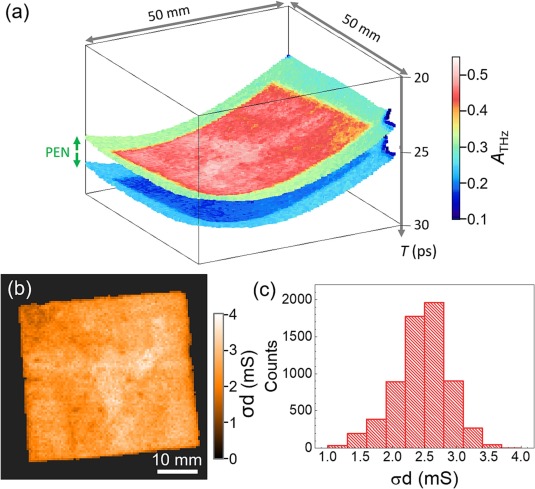
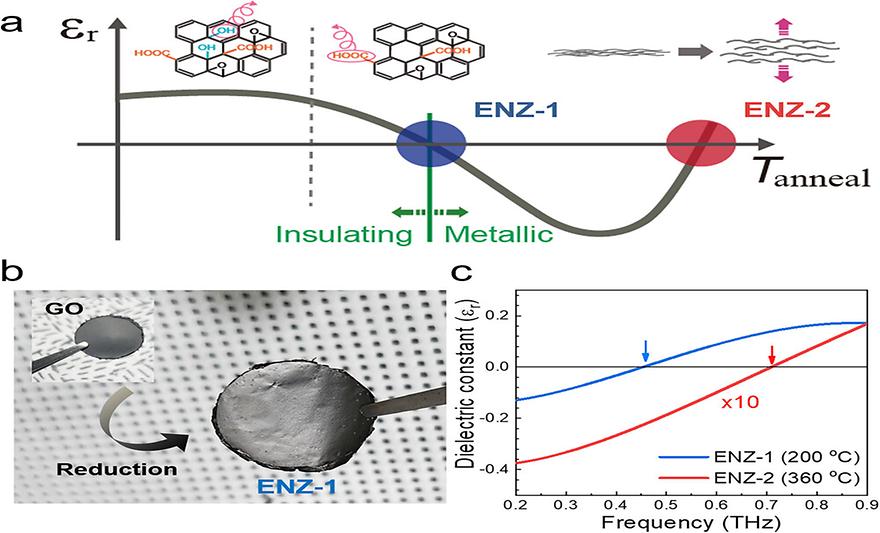
Graphene Oxides as Epsilon-Near-Zero Platforms Operating in Terahertz Frequency Rangeby Seung Won Jun, Jong Hyuk Yim, Ji-Yong Park, Soonil Lee, Yeong Hwan AhnLaser & Photonics Reviews 2024, 18(1), 2300726; https://doi.org/10.1002/lpor.202300726AbstractEpsilon-near-zero (ENZ) materials, with their unique light manipulation capabilities, have fascinating applications such as cloaking, super-resolution imaging, energy harvesting, and sensing. Herein, free-standing graphene oxide films are fabricated whose dielectric constant can be engineered by thermal reduction, resulting in ENZ characteristics at the transition between insulating and metallic phases. The ENZ frequency is found to be 0.4–0.5 THz under an annealing temperature of 200 °C, whereas another ENZ phase appeared at 360 °C. ENZ film can be transferred to curved metal surfaces, serving as superabsorbers that suppress wave reflection from underneath metal surfaces. Hyper-resolution in nondestructive THz imaging is also possible, owing to superior beaming. Spatial resolution is improved two-fold by adding the ENZ film, even when the metal pattern is enclosed by a paint layer. Lastly, hybrid sensors are developed by incorporating the meta-pattern on the free-standing ENZ substrate. The energy splitting of metamaterial resonance originating from the coupling with ENZ mode is observed. Hybridized devices have proven effective in detecting microorganisms with a low refractive index, owing to the unique dielectric configuration offered by ENZ material. Using the novel ENZ platform, a 15-fold improvement in microbial sensitivity is achieved compared with the conventional sensors.
-
76
- 작성자박은영
- 작성일2024-02-28
- 275
- 동영상동영상
-
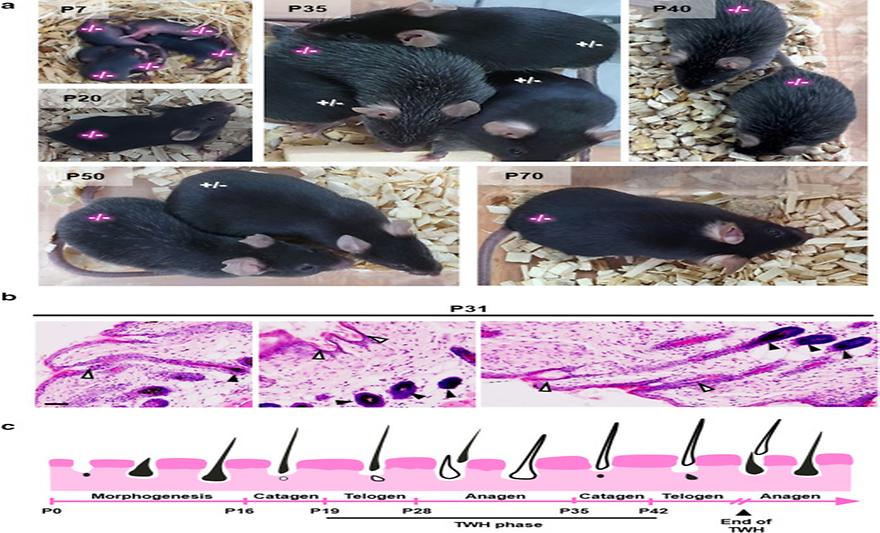
The Slc45a4 Gene Regulates Pigmentation in a Manner Distinct from that of the OCA4 Gene Slc45a2by Sofia Brito, Hyojin Heo, Byungsun Cha, Sang Hun Lee, Gunwoo Park, Byeong-Mun Kwak, Je Kyung Seong, Ho Lee, Ji-Hwan Park, Byung Mook Weon, Bum-Ho BinJournal of Investigative Dermatology 2024, 144(3), 720-722.e5; https://doi.org/10.1016/j.jid.2023.08.027In this study, we show that mouse Slc45a4 is also involved in pigmentation. By monitoring Slc45a4-knockout mice generated by CRISPR-Cas9 genome editing (Korea Mouse Phenotyping Center, Seoul, Republic of Korea) (Supplementary Figure S3a–c), we observed a distinctive phenotype consisting of a transient white hair period. This phase occurred specifically between postnatal days 20 and 70, corresponding to the first postnatal hair cycle, or the adolescence period in the case of C57BL/6J mice (Figure 1). Our observations revealed that, until postnatal day 20, Slc45a4-knockout mice had a fully black dorsal coat (Figure 1a). However, by postnatal day 35, a great portion of the dorsal coat was comprised of white hair. The white coat progressively faded along the cycle, starting from the head to the dorsal end, reducing significantly by postnatal day 49, and vanishing by postnatal day 70, corresponding to the second telogen step in C57BL/6J mice (Müller-Röver et al, 2001).
-
74
- 작성자박은영
- 작성일2024-02-28
- 307
- 동영상동영상
-
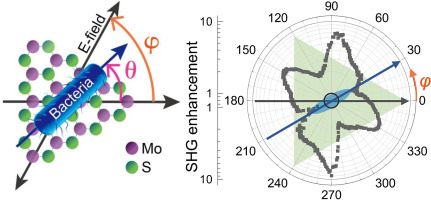
Single bacteria identification with second-harmonic generation in MoS2by Young Chul Kim, Seung Won Jun, Yeong Hwan AhnBiosensors and Bioelectronics 2023, 241, 115675; https://doi.org/10.1016/j.bios.2023.115675AbstractTransition-metal dichalcogenides exhibit extraordinary optical nonlinearities, making them promising candidates for advanced photonic applications. Here, we present the microbial control over second-harmonic generation (SHG) in monolayer MoS2 and the identification of single-cell bacteria. Bacteria deposited on monolayer MoS2 induce a change in the SHG signal, in the form of anisotropic polarization responses that depend on the relative orientation of the bacteria with respect to the MoS2 crystallographic direction. The anisotropic enhancement is consistent with the presence of a tensile stress along the lateral direction of bacteria axis; SHG imaging is highly effective in monitoring biomaterial strain as low as 0.1%. We also investigate the ultraviolet-induced removal of single bacteria, through the SHG imaging of MoS2. By monitoring the transient SHG signals, we determine the rupture times for bacteria, which varies noticeably for each species. This allows us to distinguish specific bacteria that share habitats; SHG imaging is useful for label free identification of pathogens at the single cell levels such as E. coli and L. casei. This label-free detection and identification of pathogens at the single-cell level can have a profound impact on the development of diagnostic tools for various applications.Keywords: Second harmonic generation; Transition metal dichalcogenides; Bacteria; Label-free sensing; Microbial strain
-
72
- 작성자박은영
- 작성일2024-02-22
- 333
- 동영상동영상
-
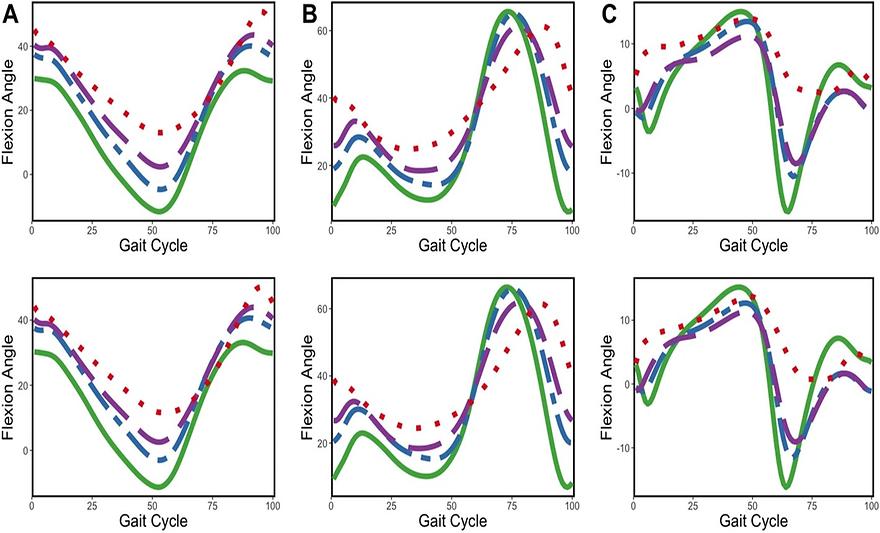
Interpretable classification for multivariate gait analysis of cerebral palsyby Changwon Yoon, Yongho Jeon, Hosik Choi, Soon-Sun Kwon & Jeongyoun AhnBioMedical Engineering OnLine 2023, 22, 109; https://doi.org/10.1186/s12938-023-01168-xAbstractBackgroundThe Gross Motor Function Classification System (GMFCS) is a widely used tool for assessing the mobility of people with Cerebral Palsy (CP). It classifies patients into different levels based on their gross motor function and its level is typically determined through visual evaluation by a trained expert. Although gait analysis is commonly used in CP research, the functional aspects of gait patterns has yet to be fully exploited. By utilizing the gait patterns to predict GMFCS, we can gain a more comprehensive understanding of how CP affects mobility and develop more effective interventions for CP patients.ResultIn this study, we propose a multivariate functional classification method to examine the relationship between kinematic gait measures and GMFCS levels in both normal individuals and CP patients with varying GMFCS levels. A sparse linear functional discrimination framework is utilized to achieve an interpretable prediction model. The method is generalized to handle multivariate functional data and multi-class classification. Our method offers competitive or improved prediction accuracy compared to state-of-the-art functional classification approaches and provides interpretable discriminant functions that can characterize the kinesiological progression of gait corresponding to higher GMFCS levels.ConclusionWe generalize the sparse functional linear discrimination framework to achieve interpretable classification of GMFCS levels using kinematic gait measures. The findings of this research will aid clinicians in diagnosing CP and assigning appropriate GMFCS levels in a more consistent, systematic, and scientifically supported manner.Keywords: Cerebral palsy; Functional sparse classification; GMFCS; Multivariate functional data; Sparse functional linear discriminant analysis
-
70
- 작성자박은영
- 작성일2024-02-22
- 295
- 동영상동영상
-
-
68
- 작성자박은영
- 작성일2024-02-22
- 343
- 동영상동영상